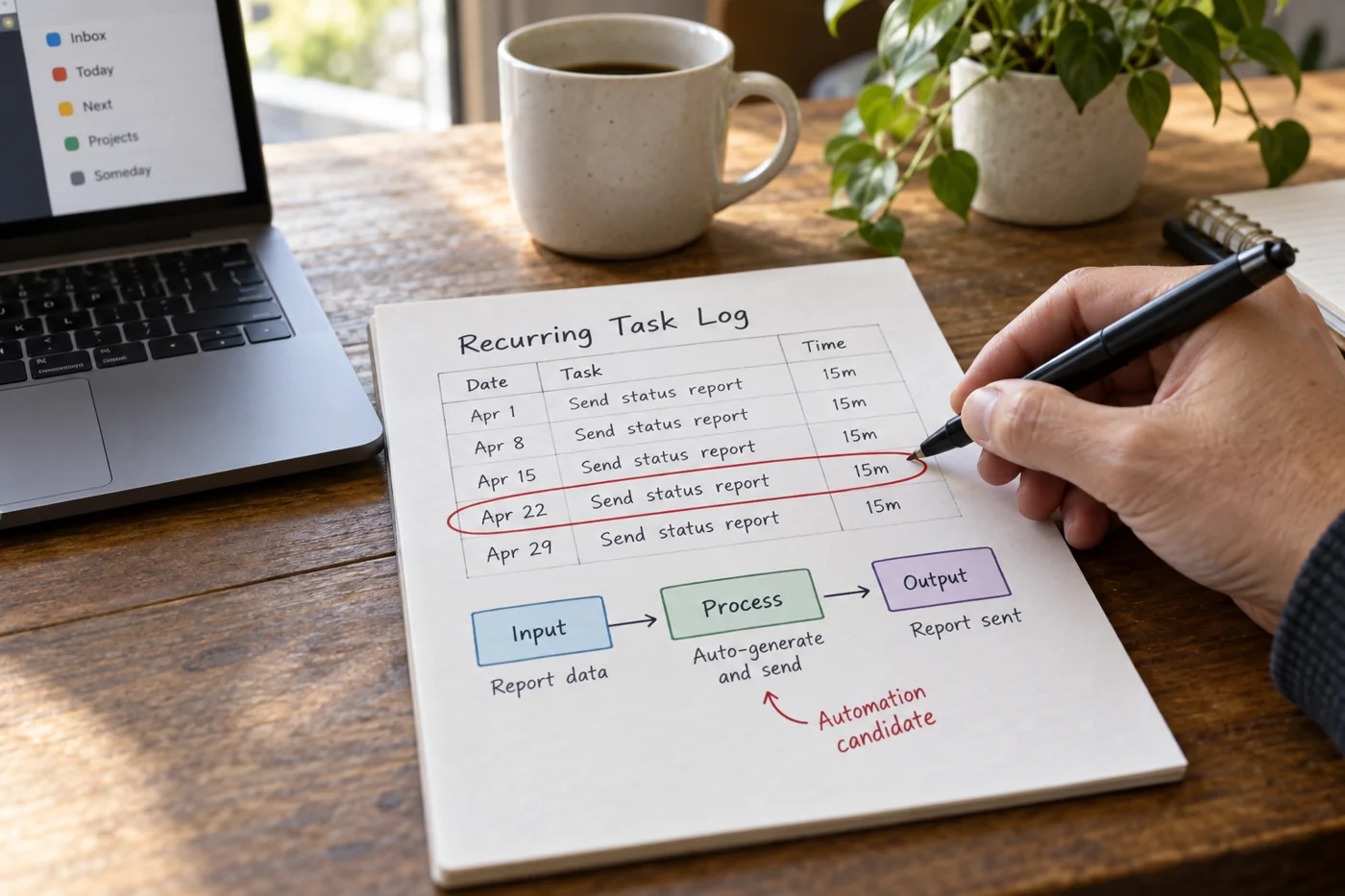
Write down the current process completely
Record the trigger, required information, handling and result. An internal form submission might create an entry in a work list. Also identify decisions a person currently makes. An unnoticed business check should not disappear simply because the technical transfer looks easy.
Observe several real runs. Which parts stay the same and which vary? A process requiring new interpretation every time may initially suit only a supporting reminder or preparation step.
Consider benefit alongside failure consequences
Estimate how much recurring effort the small step actually saves. Include setup, maintenance and checking. An infrequent task with many exceptions may remain clearer when handled manually even if automation is technically possible.
Ask what happens after a wrong result. An internal draft list is easier to review than a promise automatically sent to clients. Choose a first experiment with limited consequences and an obvious checking route.
Name inputs and exceptions
Define which details must exist. What happens with a missing name, duplicate inquiry or absent attachment? An exception should produce a visible review state rather than disappear silently. Decide who handles that state.
Check whether the trigger can occur more than once. Processing the same input twice should not quietly create a duplicate task. The technical solution depends on the tool, but the business rule should be settled beforehand.
A candidate with a clear stopping point
A recurring status message needs to appear in a shared overview. This may be a suitable candidate if sender, case identifier and status value are reliably available. First decide what should happen when the identifier is unknown. Adding the message to a review list may be more appropriate than automatically creating a new customer case.
Next check whether a message delivered twice would create two results. A unique identifier or an explicit update rule prevents repeated delivery from creating extra work. If reliable matching is impossible, keep that part of the process manual for the time being.
Compare saved entry time with time spent on checks and exceptions. For a few messages each month, a prepared template may be sufficient. The candidate becomes more useful when inputs are frequent, consistent and checkable through visible properties. Choose the first experiment using those characteristics rather than how impressive complete automation might sound.
Start with a controlled partial task
Test with suitable sample data and compare the result with the existing process. Initially review outputs before they trigger further actions. This reveals whether the assumed rule actually reflects the work.
After several runs, decide whether to extend, adjust or stop the step. Document its owner, purpose and checking route. Automation remains a maintained workflow; removing the need to click a button manually does not by itself make it reliable.