Distinguish absence from response timing
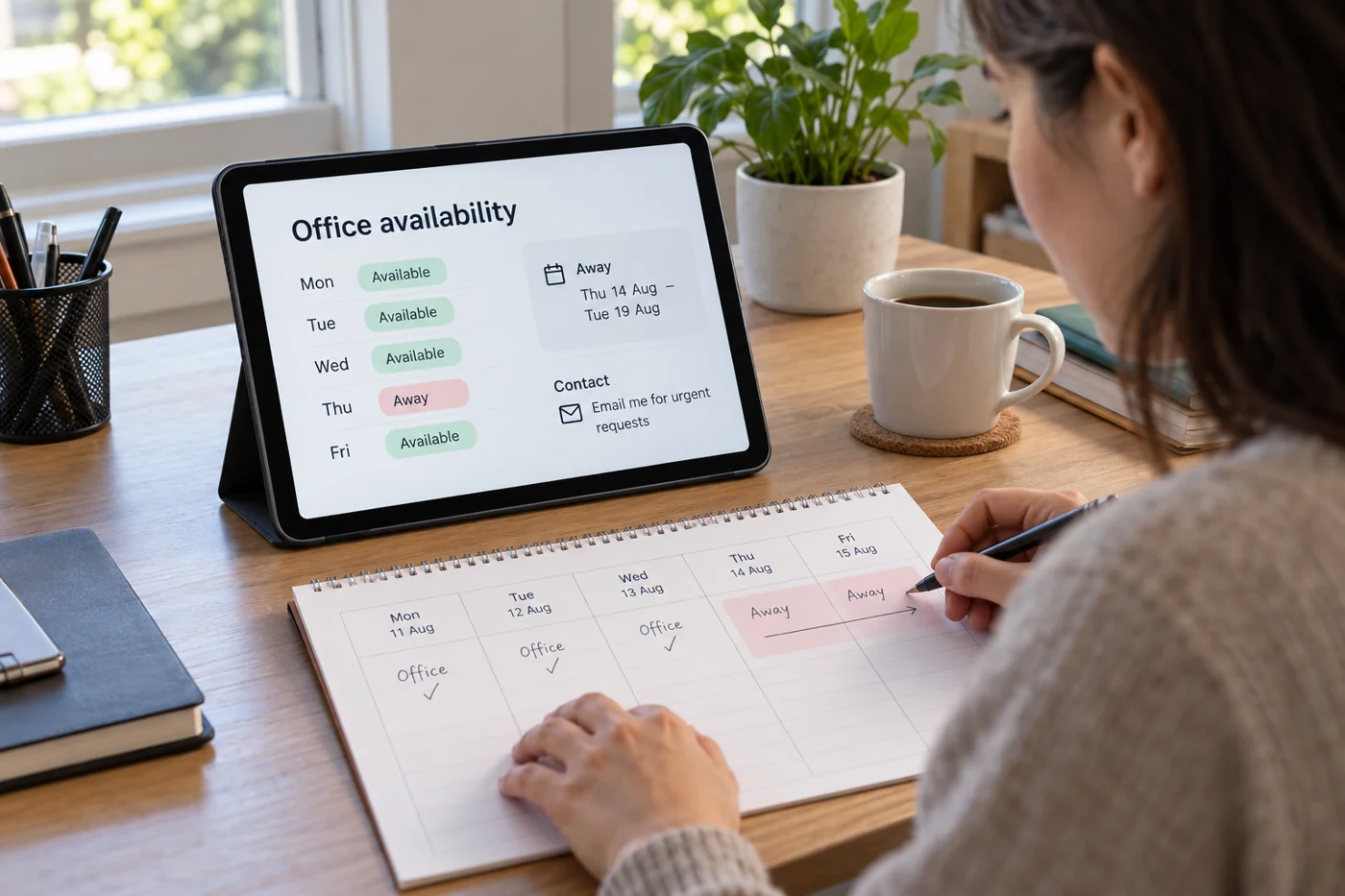
State the period with an understandable beginning and end. Also explain whether messages will be read and when handling resumes. The first day back is not automatically the day every waiting inquiry will receive a reply.
Avoid relative wording such as “next week” when the message remains active for several days. A specific date is clearer. In international work, a time zone may help explain time-sensitive availability.
Name a substitute only when they are prepared
An alternative contact needs context, suitable access and a clear responsibility. Check beforehand which matters they should handle. Forwarding every message indiscriminately can create more uncertainty than relief.
Describe the intended contact route briefly and factually. If there is no cover, state when a response becomes possible again. Do not invent an emergency address merely to make the message look complete.
Test the automatic reply and visible availability
Check the message with an external test inquiry where your email service permits this. Some systems treat internal and external senders differently. Inspect the reply actually delivered rather than only the text in the settings window.
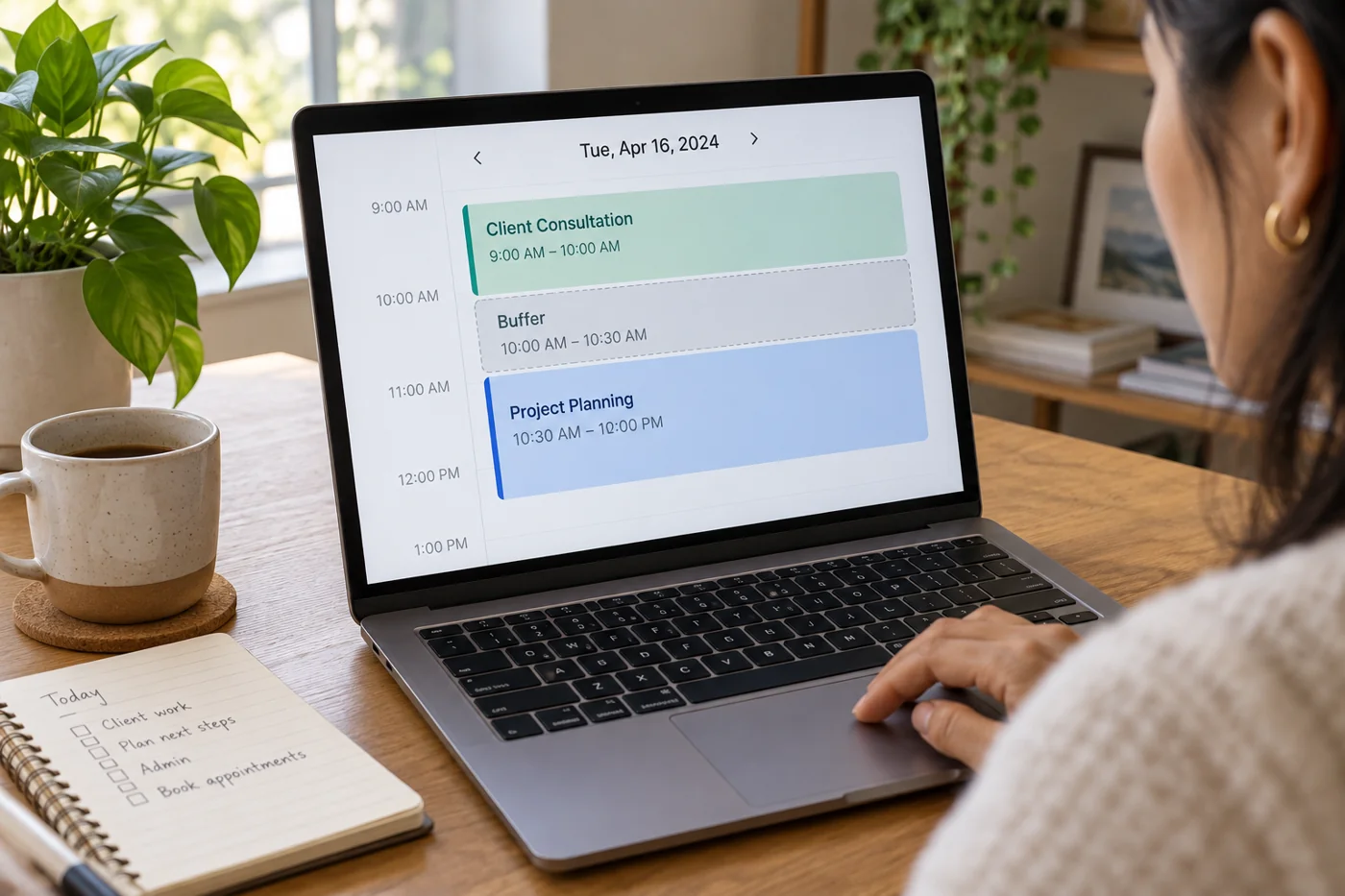
Also block unavailable periods in any public appointment system. An absence email achieves little if conversations can still be booked during the same period. Announced callback times and status messages should agree with it too.
On returning, disable or check the automatic reply and update outstanding matters. If the absence extends, deliberately revise the period. An old message with a return date already in the past leaves outsiders unsure whether their inquiry is even in the right place.
Also check whether the message exposes unnecessary internal names or contact details. A monitored role address may suit cover arrangements better than a personal mobile number, provided somebody actually handles that route.