Freeze the review version
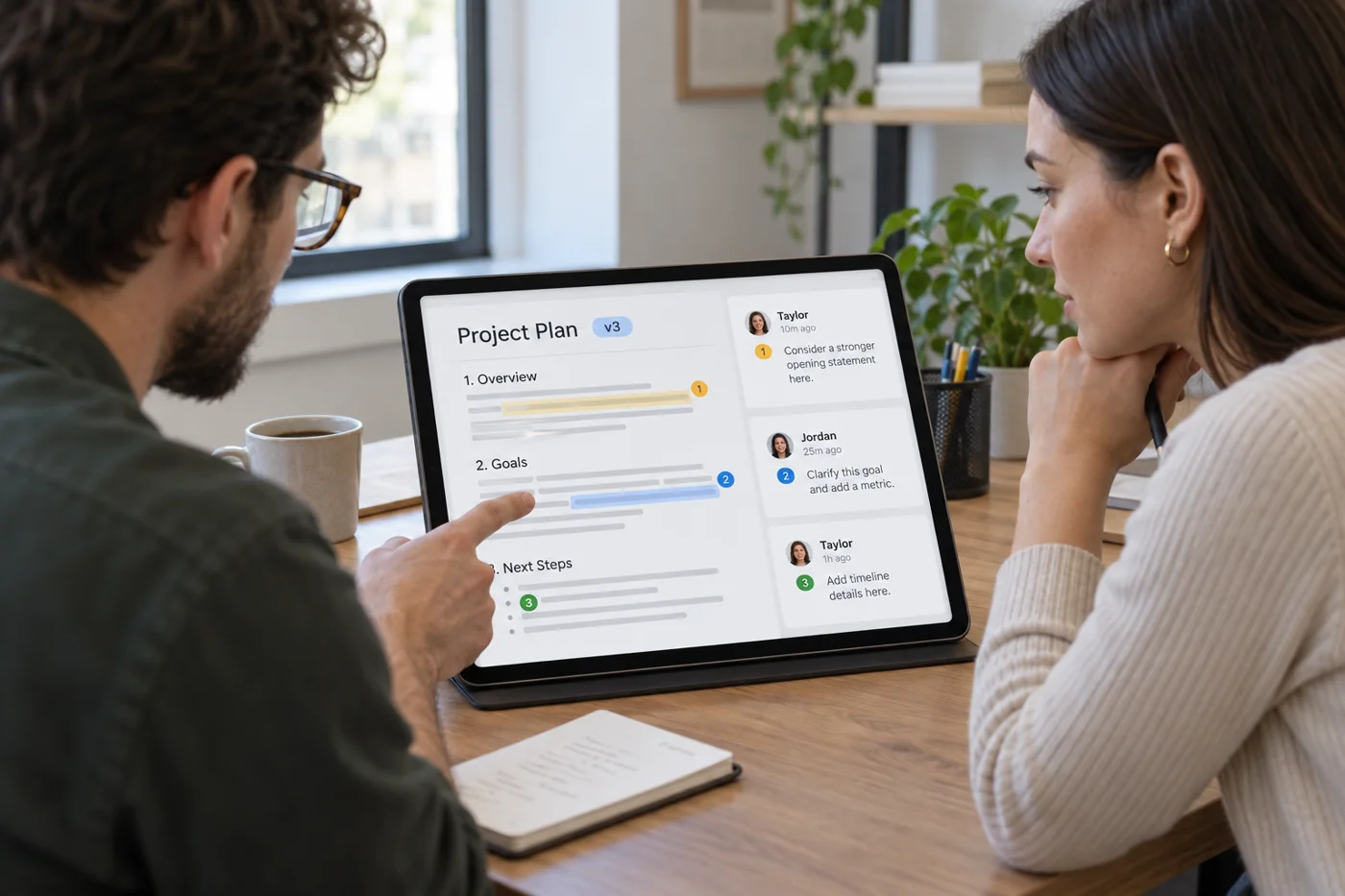
Identify the version with a date or number. Do not quietly alter that version during the review. Otherwise a comment may describe something other participants can no longer see. Continue necessary changes in a separate next version where appropriate.
Explain what needs review. An early structure review differs from a final check of phone numbers and spelling. If the design is explicitly provisional, make that clear before the file is opened.
Connect comments to specific places
Ask for a page, section or short quotation. “The second paragraph under Services” is easier to locate than “I do not like the text”. Feedback can be subjective, but it still needs a traceable reference and preferably a reason for the requested change.
For example, one person asks to make contact details easier to find while another wants fewer menu links. These requests do not necessarily conflict. Both may be satisfied by a clearly labeled contact link and removal of an unnecessary menu item. Understanding the underlying task reveals which decision is needed.
Turn multiple voices into decisions
Establish who reconciles conflicting wishes on the client side. You can expose the differences but should not quietly choose whose opinion takes priority. Keep an unresolved decision separate from an agreed correction.
Classify feedback by action: implement, clarify, consider later or decline with a reason. A comment does not automatically become an additional commission. Changes outside the discussed scope need separate clarification before appearing as committed next steps.
When two comments conflict
One reviewer wants a shorter introduction while another asks for additional detail in that same paragraph. Bring both requests together before implementing two successive changes. First identify the shared objective: should the page be quicker to understand, or should it explain every condition before someone makes contact? A short opening followed by a separate detail section may meet both needs, but the responsible person should confirm that choice.
Present concrete alternatives for a decision. “Version A has three opening sentences; version B also includes the process” can be checked. “Please discuss this again” usually creates another unresolved round. Record the chosen alternative beside the original comment so that a later reader can see why the other request was not followed.
After implementation, keep the next review focused on that change. New ideas can still be recorded, but give them a separate entry with a decision about scope and timing. This prevents a confirmed correction from silently becoming a complete redesign.
Make the next version traceable
Provide a short change list with the next version. It need not enumerate every moved line, but it should explain substantial decisions and points not adopted. The next review can then concentrate on actual changes.
Clearly close the previous review round. New comments belong to the new version or an explicitly named follow-up check. Do not leave several documents simultaneously labeled current. A clear connection between version, feedback and decision saves unnecessary comparison work, especially on small projects where there is no dedicated coordinator to reconstruct the history.