Distinguish three kinds of entry during the discussion
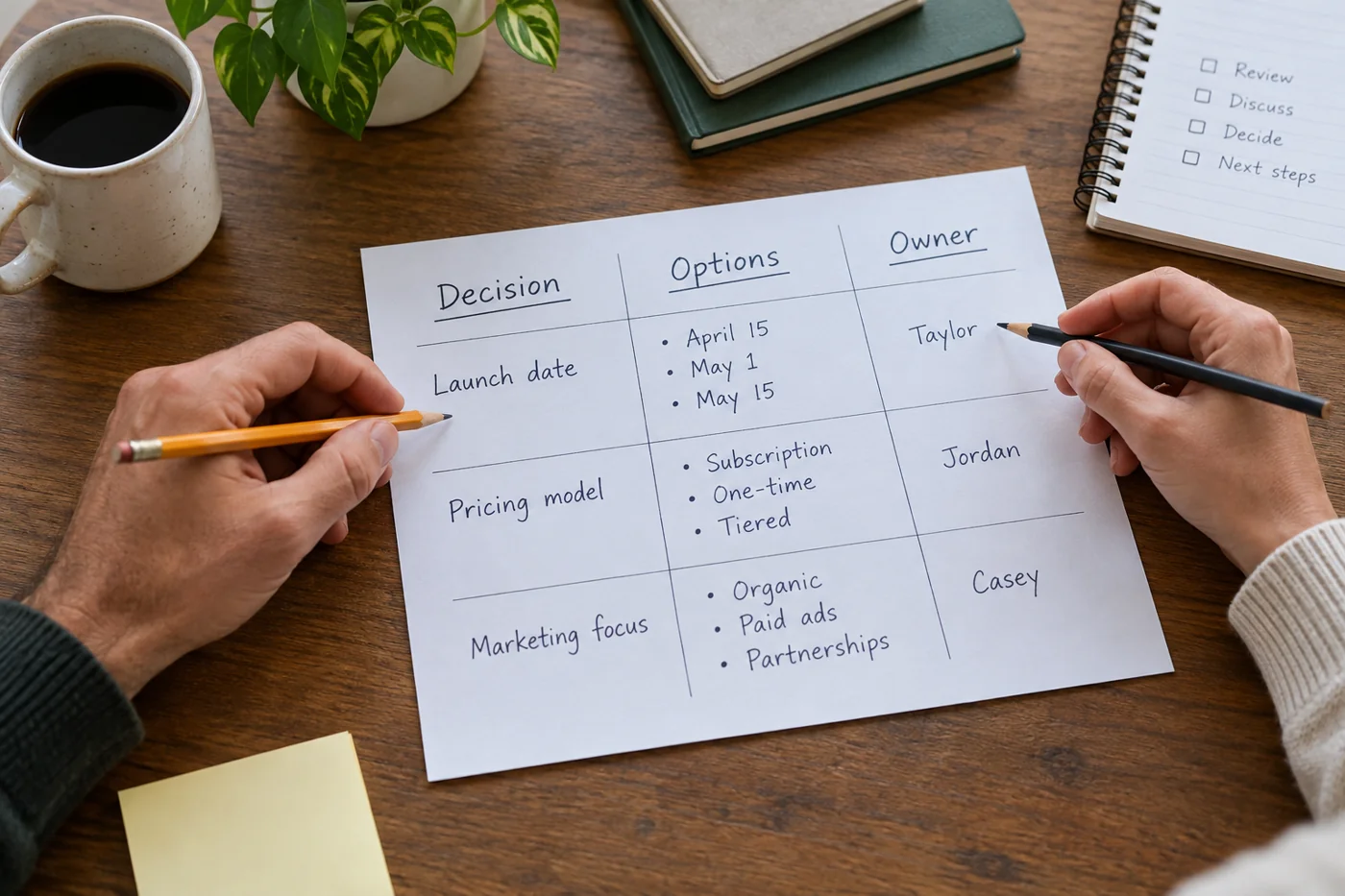
Write a decision as a complete sentence. “Quotation” is only a topic; “We will use the revised quantity list for the internal estimate” states a decision. Add its scope where necessary so nobody interprets it as approval for another purpose. An internal working reference, for instance, is not yet a commitment to an external recipient.
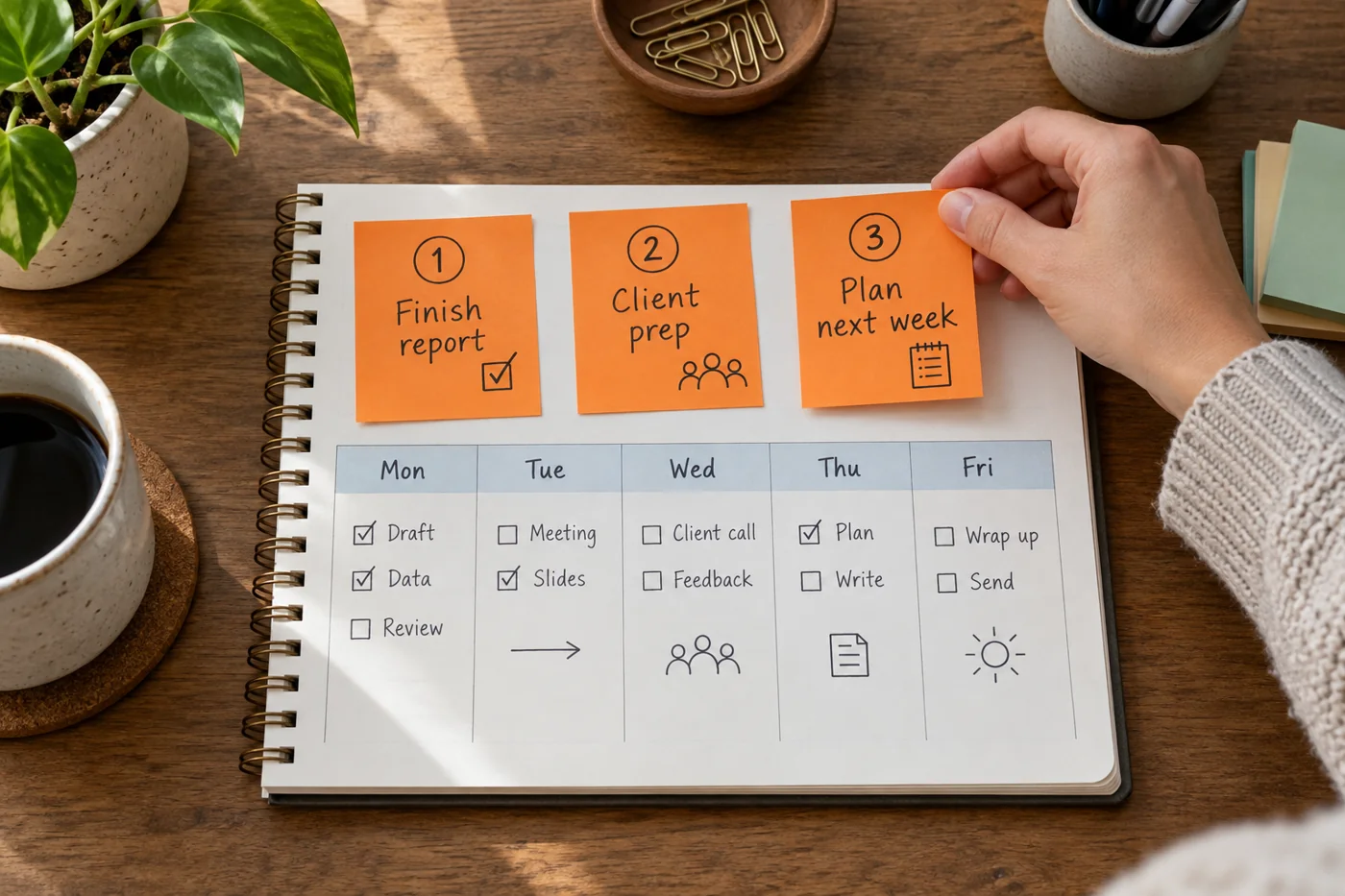
An action describes something to do with an identifiable result. “Check the quantity list” leaves the outcome unclear. A more precise version is: “Mark missing items and put the checked list in the project folder.” Keep open questions separate. They should not look like agreed actions when information or a decision is still missing.
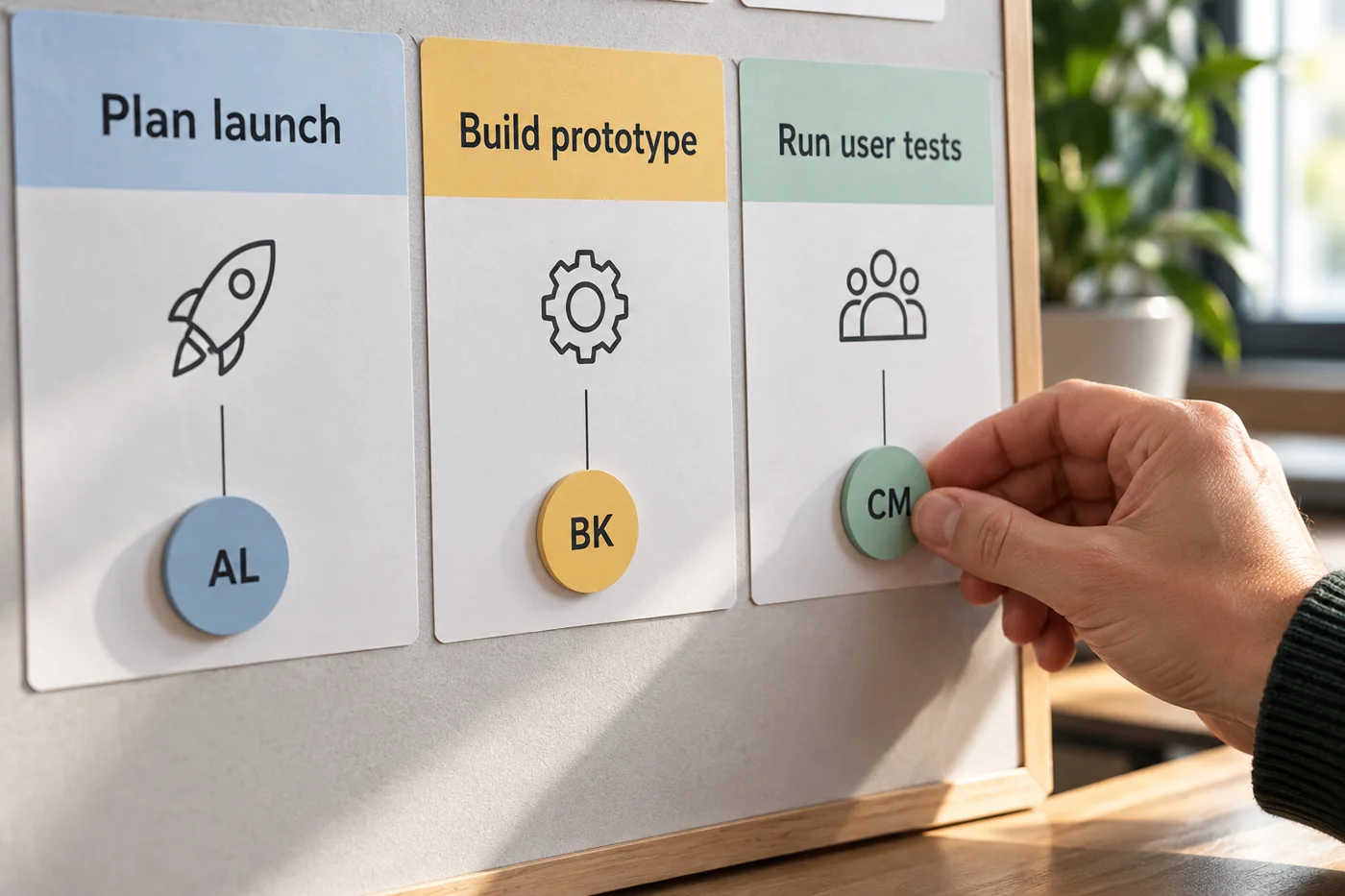
Name one owner and the next point in time
Each action needs someone who takes the next step. Several people may contribute, but a collective label such as “sales and office” does not explain who moves it forward. Ask explicitly during the meeting when responsibility remains unclear. Guessing afterwards in the notes does not create a dependable agreement.
A date helps when a result is genuinely required by then. With uncertain effort, agree an interim update instead: “Report on Thursday whether the missing information has arrived.” Distinguish completion from a progress report. Otherwise, a review point can later be mistaken for a missed delivery date.
Check the note before the meeting ends
Read the decisions and actions back briefly before finishing. Contradictions then become visible while the participants can still respond together. Rather than only asking whether everything is correct, name unclear points: is the list already approved or awaiting review? Who informs the absent colleague? Which previous agreement is being replaced?
Add the date, purpose and a clear connection to the project. Include attendance only when it helps later interpretation. Avoid personal asides and information that serves no purpose in the decision or implementation. The note should explain the working position rather than collect every spoken word.
Provide one accessible version rather than several copies
Store the note where the team keeps material for this project. Where possible, send a reference to that version with a short explanation of what it contains. Check that the intended people can access it. A technically valid link is unhelpful if the action owner must first request permission.
Make corrections traceable. Do not silently replace an already confirmed decision with different wording. Record what changed and who confirmed the correction. Earlier responses then remain understandable.
Begin the next contact with open points
Use the action list as the starting point for the next discussion. Completed items receive a brief outcome or a reference to the resulting file. Blocked actions need an identified missing prerequisite and the next review date. If an item is no longer required, close it explicitly with a short reason.
This upkeep need not be elaborate. What matters is that a later reader can understand what applies, who acts and what remains outstanding without remembering the conversation. If one of those questions is unanswered, add that particular information rather than retelling the entire meeting in greater detail.