Report outcomes rather than activity alone
“Contact page revised and checked on a phone” communicates more than “worked on the website”. Name the visible state and link to the relevant version if it is ready to share. The update does not need to reproduce every internal intermediate step.
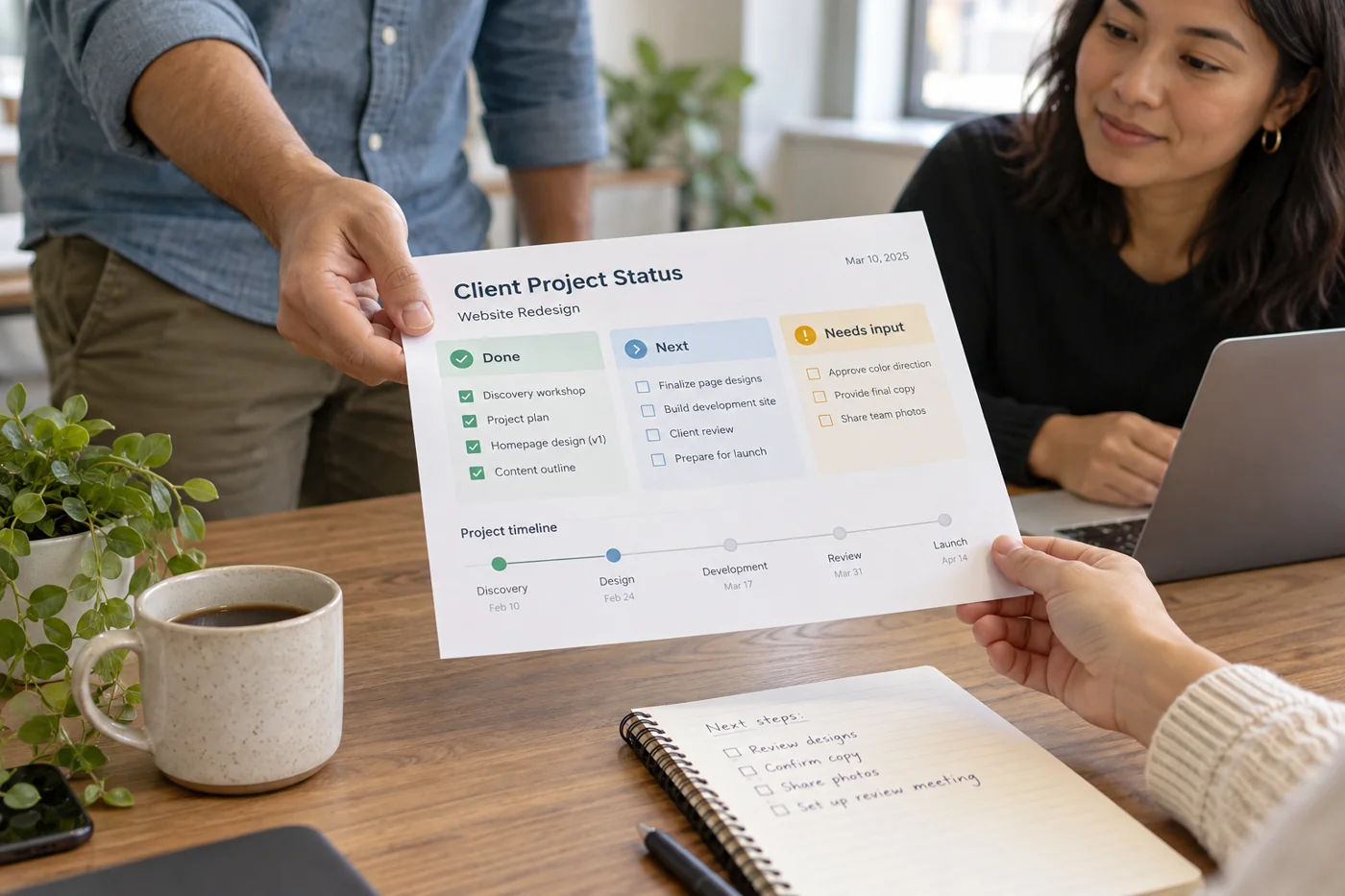
Separate finished work from work that has started. A draft awaiting review is not a completed result. If a task is partly complete, describe the remaining part specifically. A general percentage often implies more precision than is actually available.
Make outstanding decisions easy to find
When a response is needed, state the question, its context and the requested timing. “Please confirm the contact address for the new page by Wednesday” is clearer than “feedback requested”. Explain which next step depends on the answer.
Keep multiple questions distinct. Do not combine design, scheduling and missing account information into one long sentence. Confidential access details do not belong in a general status report anyway; refer to the agreed route for sharing them.
Explain timing and the next contact
Name the next planned delivery or review. If a date has become uncertain, explain the cause and the next clarification step. A revised estimate should be recognisable as an estimate. Do not quietly replace an earlier commitment in an incidental list.
Agree an appropriate frequency. For a short project, updates after particular milestones may make more sense than a daily report. A longer engagement may need a regular rhythm even while an external response is outstanding.
Read the finished update with three questions in mind: What is new? What must the other person do? When is the next visible step? If those answers are easy to find, the message serves its purpose without requiring an elaborate dashboard.