Define what has actually closed
Agree with the responsible person which outcomes are complete. A handed-over document may still have outstanding corrections. Keep remaining tasks visible in the active working area and connect them to the project. Do not hide unfinished work inside a folder labeled complete.
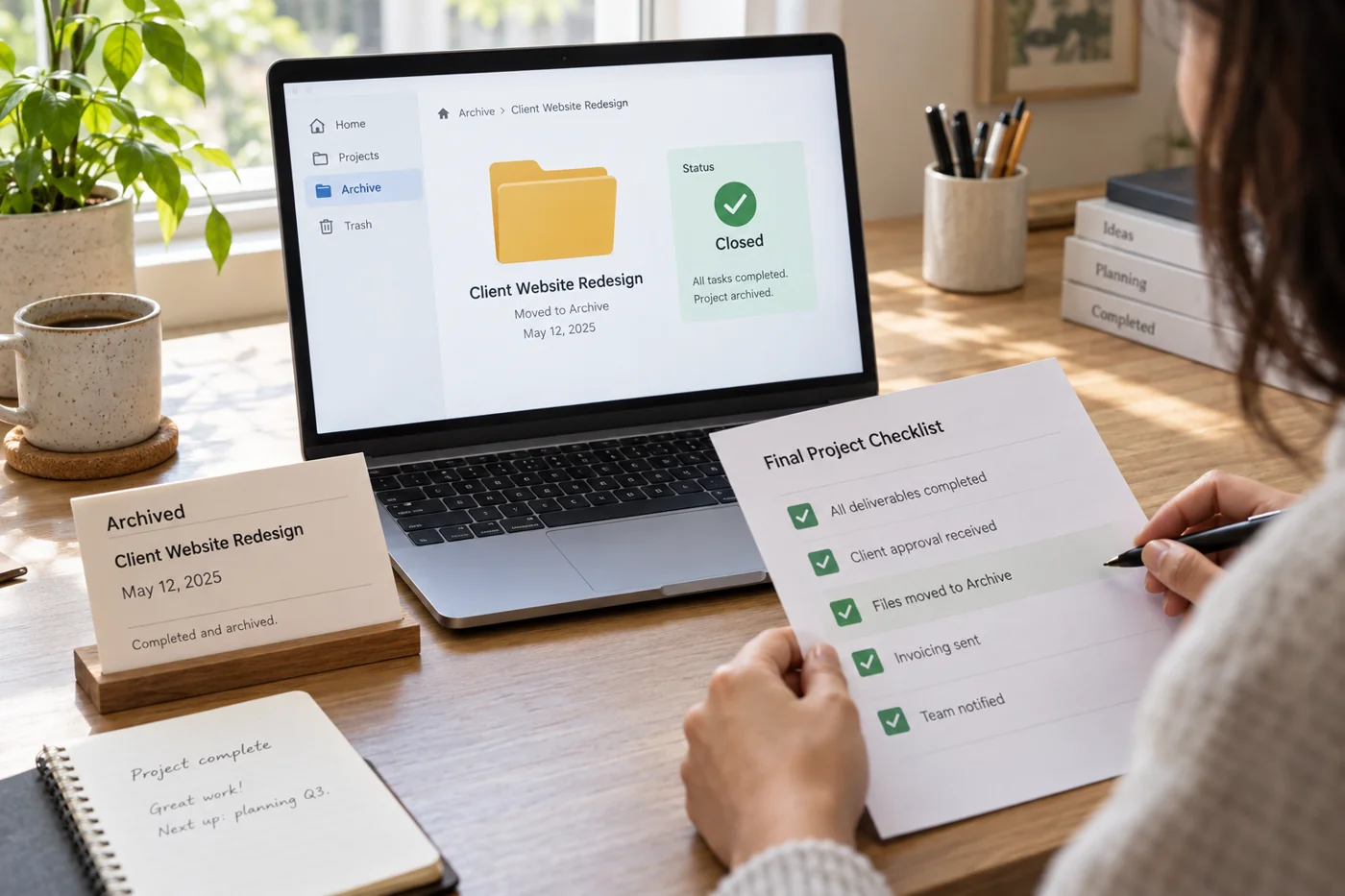
Write a short closure note with the project name, period, responsible team and final outputs. Mention significant limitations, such as a plan applying to only one location. A later reader needs that context before carrying old information into a new situation.
Select records with their context
Separate confirmed results from drafts and supporting information. Keeping every identical copy is rarely helpful, but an old date alone is not a reason to delete a file. Check applicable internal retention arrangements and obligations with the responsible team. This should not be an improvised housekeeping decision.
Where comments or messages explain an important assumption, establish which evidence is needed to understand the result. An approved figure without its assumptions may be misleading later. Point to accessible records rather than gathering every conversation simply because it exists.
Arrange access and later use
Name a person or role responsible for archive inquiries. Review which former contributors still need access. Closing a project often changes the relevant group, but removing everyone without checking can prevent the responsible team from retrieving necessary information.
Open selected files and links after moving them. Pay particular attention to references leading into personal working areas. Record the archive location in the former project area or central register so that a missing folder does not look like lost information.
Finally, agree how subsequent corrections will be identified. Silently replacing an archived version makes its history difficult to explain. If a correction is necessary, record the reason, date and connection to the previous version. For a project with several outputs, check that the closure note identifies the actual final file for each one, rather than merely directing readers towards a large directory.
Distinguish an archive from a backup
A project archive explains which records belong to a completed case. A technical backup serves a different purpose and does not answer that business question by itself. Do not assume that an existing backup replaces the selection and explanation of archived material. Equally, an orderly archive should not be treated as evidence that technical recovery arrangements work.
Take one actual output and ask whether a later reader could understand how it came about. For a completed location plan, this might require the approved layout, its main assumptions and the connection to the decision. A large collection of unlabelled intermediate versions does not automatically improve that explanation. Select according to significance and applicable arrangements rather than available storage space.
Where files refer to external working areas, resolve the dependency before closure. A reference may later disappear or remain accessible only to former project members. Agree with the responsible team whether a lasting internal record is required and how it can legitimately be provided. Do not copy other people's or confidential material without checking the permitted approach.
Try answering a later inquiry
Formulate a typical question, such as: “Which room layout was approved, and what attendance figure was it based on?” Try answering using only the archive and closure note. Missing references and contradictory versions become apparent quickly.
Add only information that genuinely improves that route. The exercise should not generate another extensive document. It establishes whether the archive provides an understandable conclusion or has merely moved the earlier disorder elsewhere. Ask someone who did not prepare the archive to repeat the search where possible; their interpretation is a useful test of labels that seem obvious to the original project team.
Also identify the role that can answer a later substantive question if the original project lead changes. Prefer a maintained responsibility reference over an unexplained personal note. An archive should remain discoverable and understandable after staffing changes, without depending on former participants reconstructing the context from memory.