Treat capacity as working time
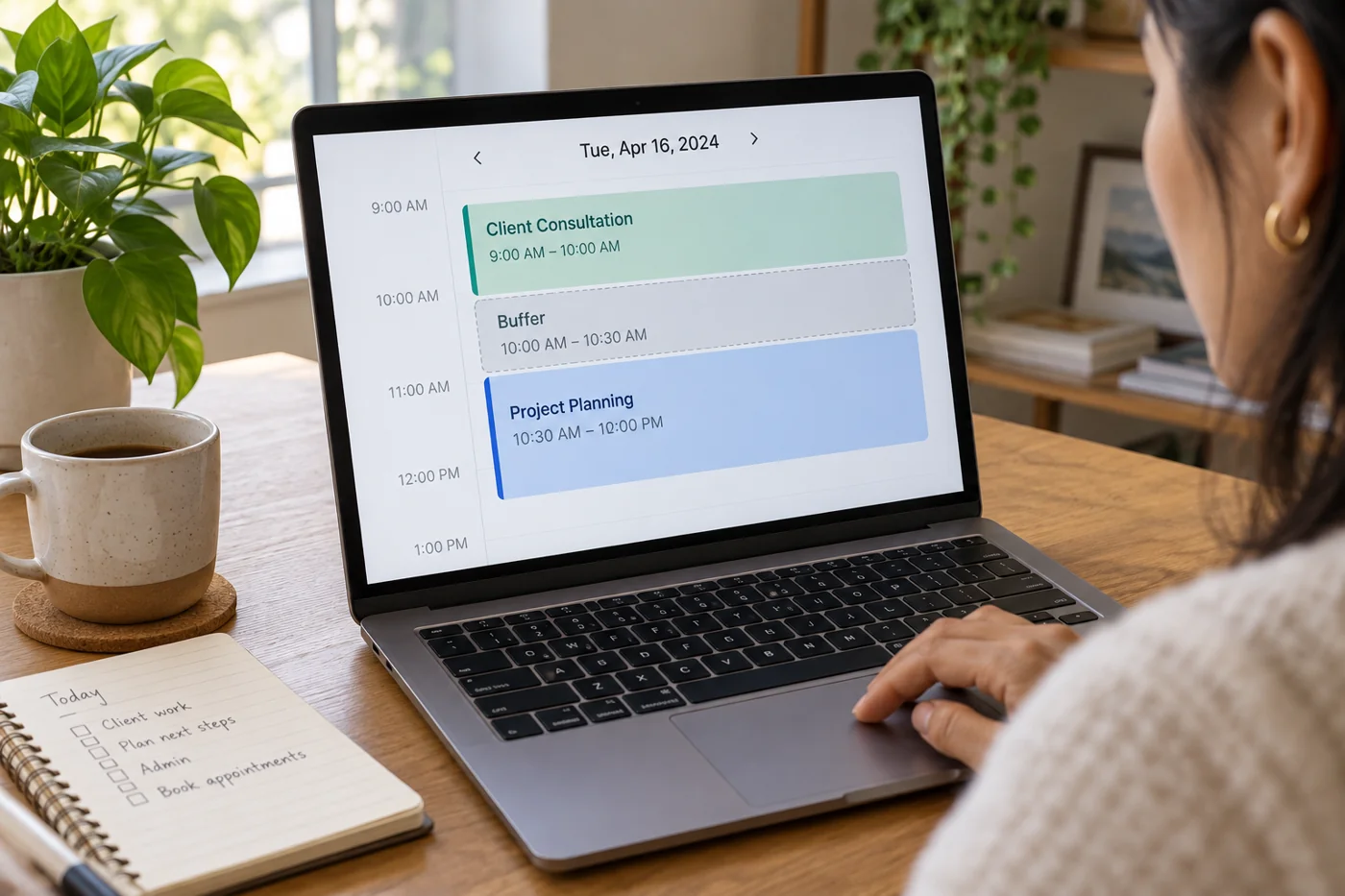
List tasks that do not appear as client appointments: preparation, follow-up, internal coordination and focused project work. If this time is not protected, bookings may fill the entire visible day. That is not necessarily a calendar fault; it can be incomplete planning.
Consider shared resources. Two people may be available simultaneously but need the same room or equipment. Decide which calendar or internal rule represents that constraint.
Test appointment types together
Do not inspect each booking page only in isolation. In a test, book different appointment types consecutively and examine which times remain available. An initial consultation and a follow-up should not independently occupy the same person’s time.
Also check recurring internal meetings, absences and provisional reservations. Their effect depends on the system and the event state. Do not assume a visible entry in your own calendar necessarily blocks public availability.
Walk through a fully booked day
Suppose four conversations are possible but each needs half an hour of subsequent processing. Check whether that time really exists between or after them. A daily cap may be more useful than apparently open booking from early morning to evening.
Test a short-notice absence too. Who can see which appointments are affected, and who contacts the participants? Capacity planning should work beyond the ordinary case. Keep the organisational fallback short and easy to find.
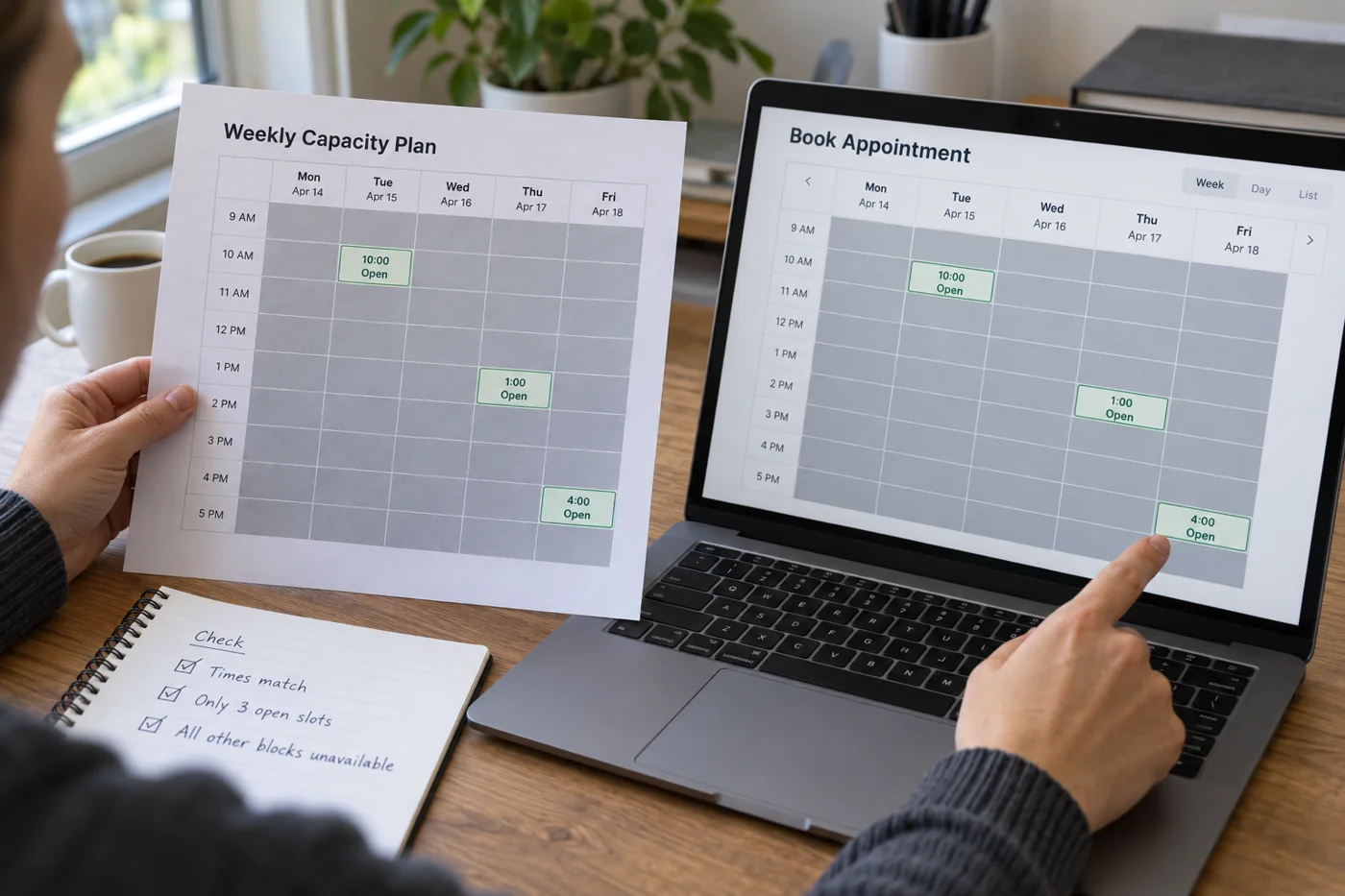
After a week, compare booking volume, actual conversation lengths and unfinished work. Adjust available blocks using that picture. The appropriate number is the one that allows promised appointments and their associated work to fit reliably into the intended day.