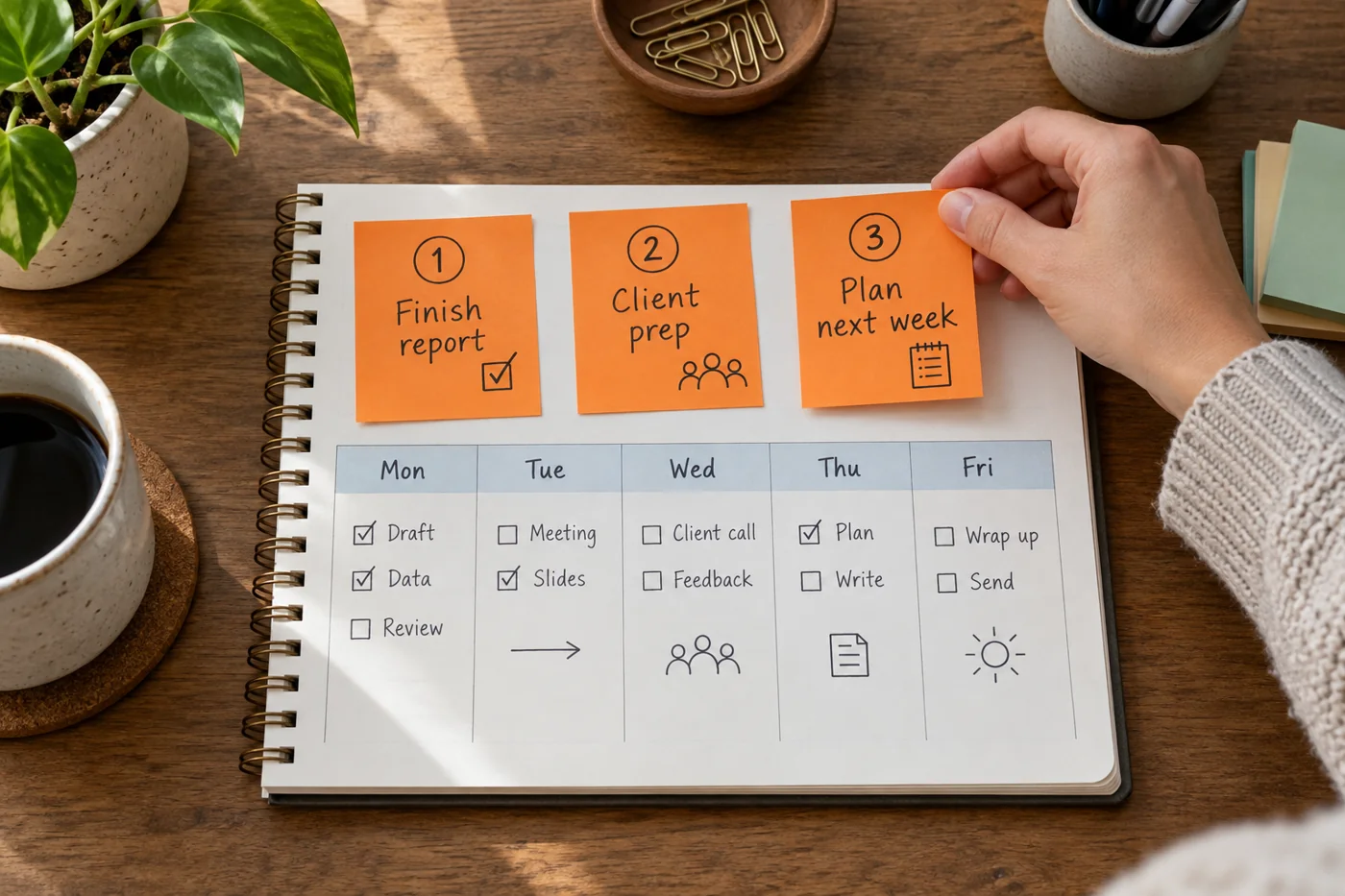
Prepare the work before the block
Check that the necessary information exists. If a response is missing, obtaining it is the first task. Otherwise, a reserved morning becomes a series of questions even though the intended work cannot begin. Keep the relevant files and last confirmed version accessible.
Define a realistic stopping point. “Finish the project” may be too large for a short block. “Mark missing information and outline two possible solutions” is more bounded. The block can end with a useful intermediate result if that was deliberately chosen beforehand.
Agree availability with the team
A calendar entry alone does not explain whether urgent questions can reach you. Agree an appropriate route for genuine interruptions and distinguish it from ordinary questions. Existing availability or service obligations still apply; a focus block does not independently remove them.
Limit notifications using the available settings. First check which alerts your work genuinely requires. The aim is not to disconnect everything universally, but to reduce unnecessary switching during this particular period.
Create a continuation at the end
Record what was produced and what is needed next. If work takes longer, do not automatically move every following appointment. Decide which further section is required and when space exists for it.
After several attempts, adjust the duration to the actual work. A block repeatedly interrupted by the same question may reveal an unresolved team rule. One that is always too large needs a narrower endpoint. Use these observations in the next plan rather than simply filling the calendar with increasing amounts of protected time that colleagues cannot understand or use appropriately.
If a planned focus block repeatedly falls through, review its timing and competing commitments. Do not keep moving it indefinitely. The task may need a smaller first step or an explicit priority decision before another calendar slot is likely to help. Record that decision where the task is managed.