Distinguish messages by purpose
Not every message creates work. Some provide information; others contain a question or specific request. Define which cases need action and which are simply filed. An unread marker is not a dependable shared task status when several people use the same view.
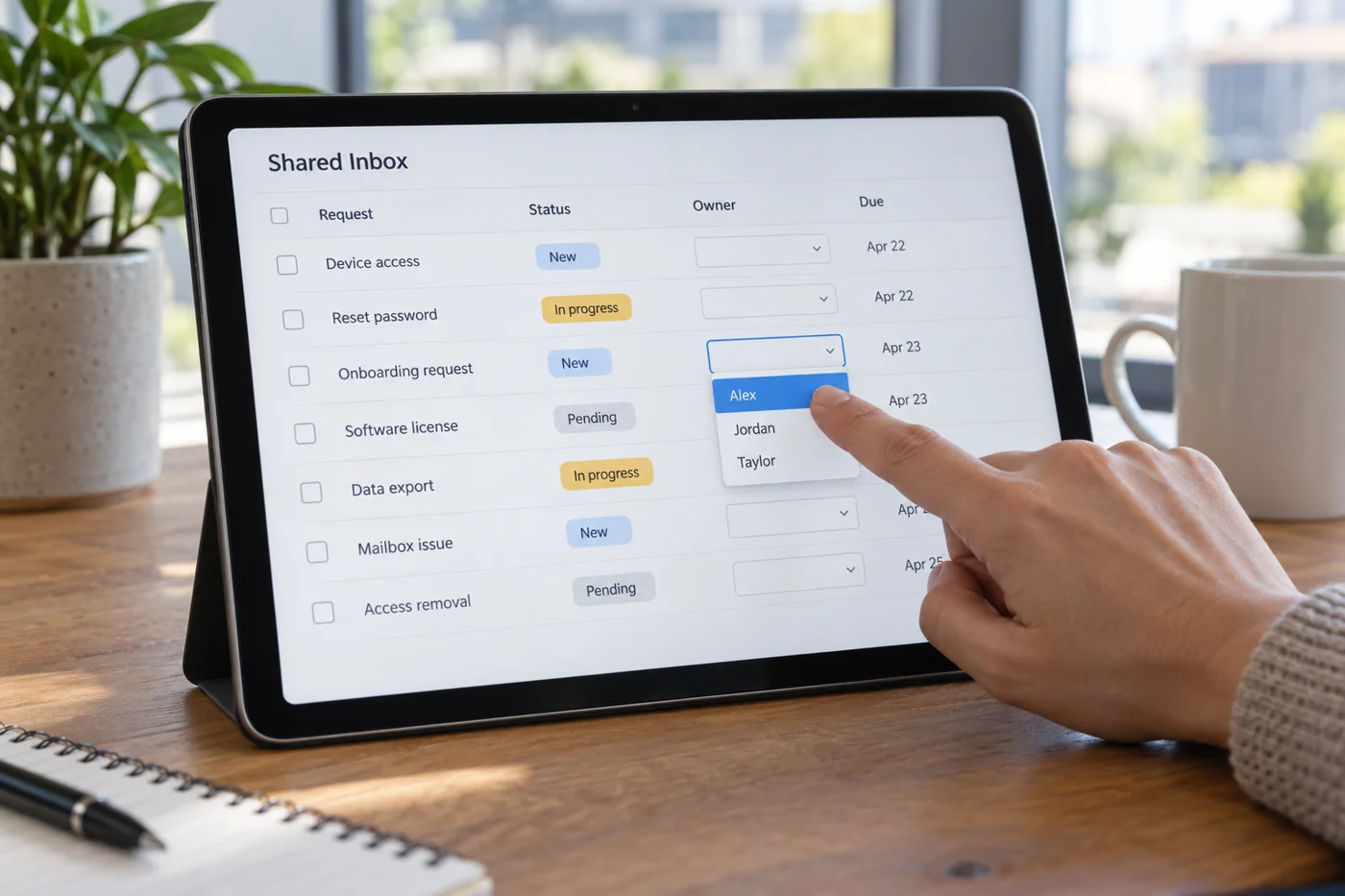
For a work request, make the outcome, owner and next step visible. Use existing system features or a connected task view. Shared meaning matters more than a particular color or folder label.
Coordinate ownership and replies
Mark who takes a case before working on it. First check whether an answer or task already exists. Forwarded messages and fresh replies may bring the same case back into the inbox. Connect them with the existing work rather than automatically starting another task.
When one person needs another's information, keep overall ownership visible. Forwarding alone should not silently mean that the original task has changed hands. Explicitly agree when someone else takes over and how they acknowledge it.
Allow for completion and absence
A replied-to case may still contain unfinished work. Check whether the agreed outcome exists before treating it as complete. Keep a reference to the answer or file so later searches need not cross several personal filing systems.
Absences need a cover rule. Personal markers should not leave tasks unattended for a week. Regularly review old open entries to establish whether they are blocked, forgotten or already finished elsewhere. The inbox then remains a shared intake point rather than an unclear substitute archive for every kind of work. Keep the rule brief enough that a covering colleague can apply it without learning several private habits.
Keep ownership connected when several replies concern the same case. Check new messages for that relationship before turning each into another task. Additional information may change an existing assignment without creating a second independent case. This helps prevent colleagues from unknowingly working on the same request in parallel.