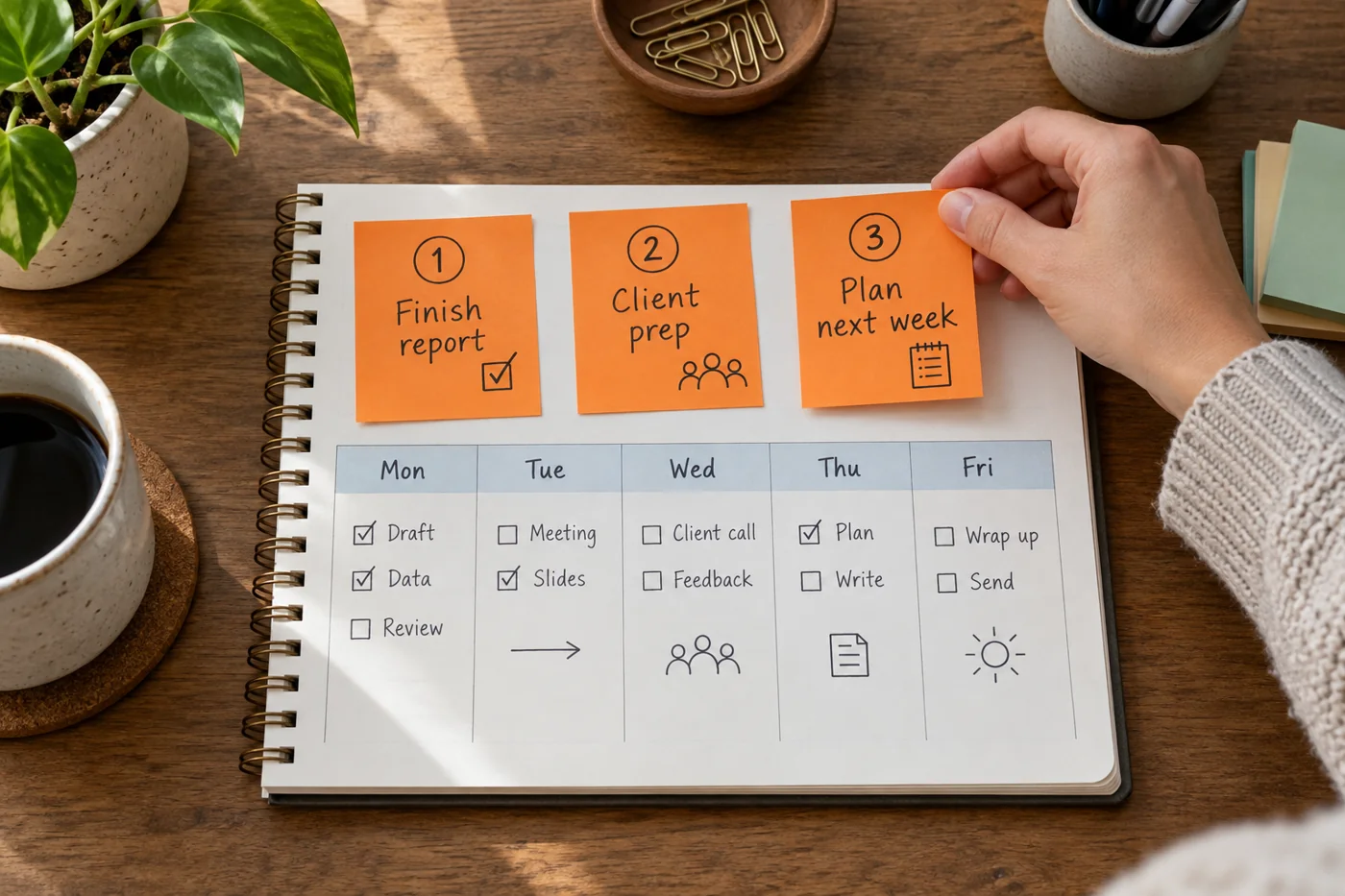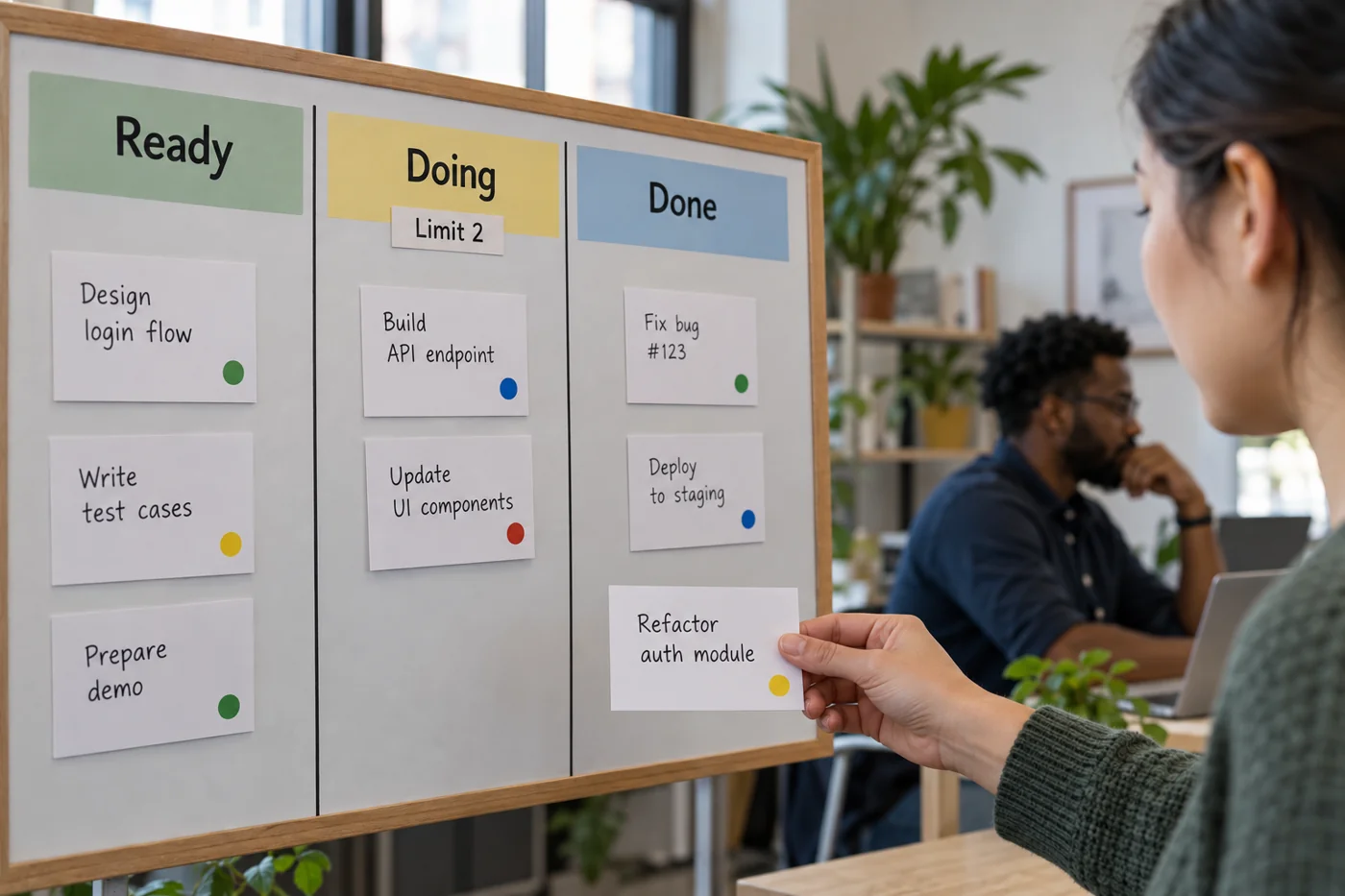
Define what started means
A task is active when work has genuinely begun and an outcome remains due. An idea on a wish list does not count. A blocked task may still consume attention, however. Mark the blockage rather than removing it from view and creating an illusion of free capacity.
First count ongoing tasks together and ask which can be completed next. Finishing a nearly completed case may provide more value than starting another. Consider dependencies and actual priorities in that decision.
Require a decision before another start
When much work is already active, a new task should trigger a deliberate trade-off. What will be finished, deferred or reassigned? Keep the decision visible. A limit silently exceeded for every request remains merely decorative.
Urgent exceptions may be necessary. Name the reason and effect on other work. An exception then does not become an invisible permanent rule. Repeated emergencies deserve investigation rather than simply increasing the limit each time.
Assess the effect through outcomes
Observe whether tasks reach a useful finish sooner and fewer handovers remain open. A smaller active-task count is not an end in itself. Moving work to another invisible list does not improve the process.
Adjust the limit to actual collaboration. A team with necessary waiting periods may need a different display from one doing continuous work. Still show which tasks require attention and who pursues the next step. This keeps the view honest and supports specific decisions rather than turning the number into a target detached from the work it is meant to organize.
Make sure a paused task retains its next action. Record what needs checking first when work resumes. Otherwise, reducing work in progress may save attention now while creating unnecessary reconstruction later. A short restart note makes a deliberate pause different from simply abandoning an unfinished case.