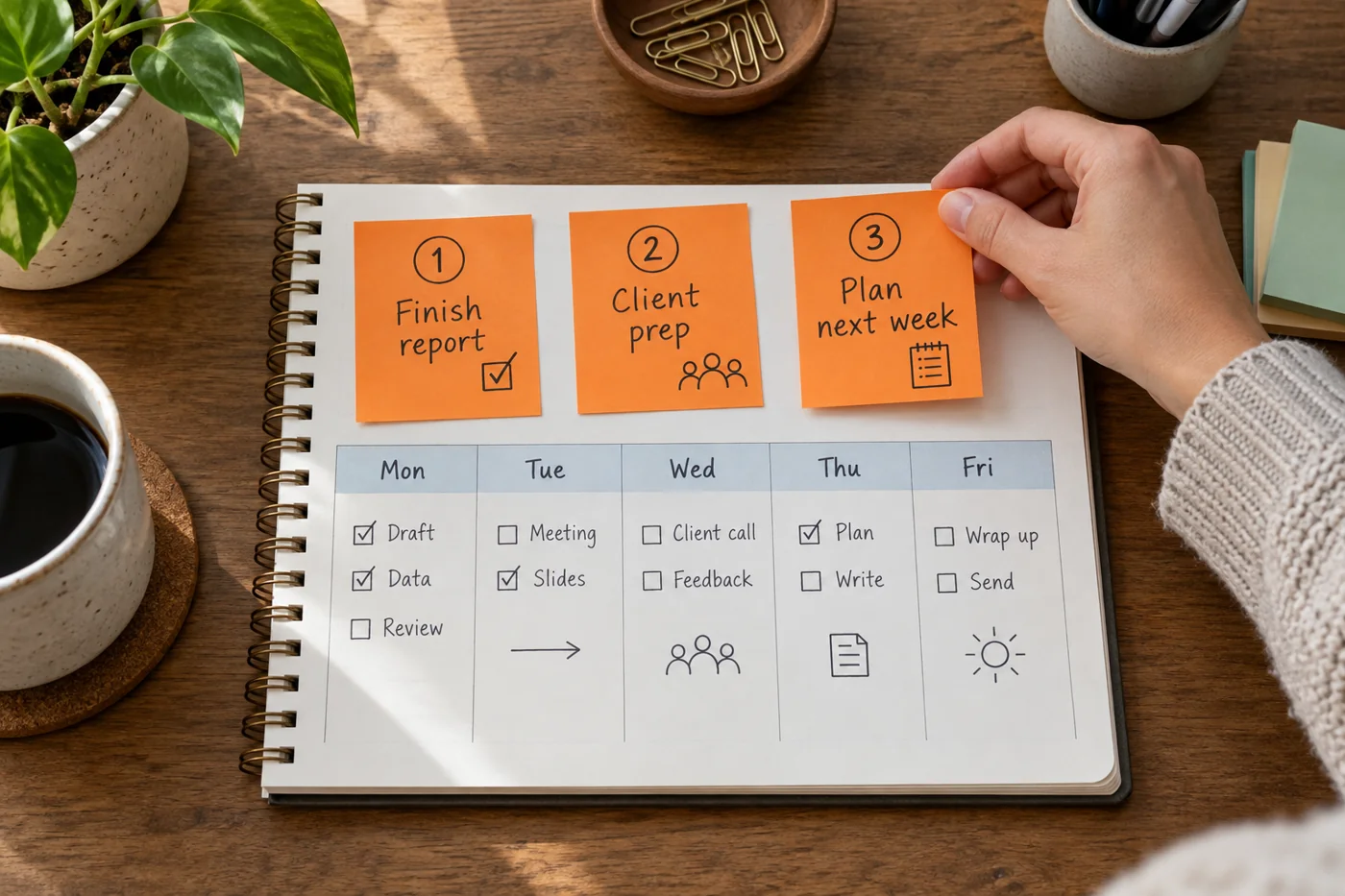
Collect comparable information
For each task, record the owner, next required result, deadline and known obstacles. A broad effort estimate may help if the team shares its meaning. Avoid apparently precise figures without a sound basis.
Separate active work from waiting tasks. Ten outstanding responses create a different load from ten documents being produced simultaneously. Show recurring duties too when they occupy a substantial part of the week. Otherwise, people with many routine obligations may appear incorrectly available.
Look for bottlenecks, not rankings
Find places where several tasks need the same person or approval. Ask which must happen first and what can genuinely move. Do not allocate more work simply because someone's list looks shorter.
Discuss uncertainty openly. A task may grow because information was incomplete rather than because someone planned badly. Update the assessment and decide about scope or support. The view should enable decisions rather than become a round of personal justification.
Agree a specific change
When work moves, clarify the handover, including documents and ownership. A new name in the table does not create a usable transfer. If a deadline changes, inform affected people and update dependent steps.
Keep the view only as detailed as this coordination requires. Personal side information does not belong there. Regularly check whether the chosen fields actually lead to better decisions. A maintained display without resulting prioritisation adds documentation but removes no bottleneck. Review the agreed changes at the next discussion to see whether they reduced the pressure or merely moved it elsewhere in the team.
Consider effort and availability together
Two people with five tasks each may have very different workloads. One task may take minutes while another requires several concentrated stages. Add a rough view of remaining effort and visible fixed commitments where these are needed for planning.
Account for part-time schedules, absences and work outside the list being discussed. Someone who appears free may have recurring operational responsibilities that have not been recorded. Ask about those commitments before assigning more work.
Use the overview to make specific decisions: which task can wait, which contribution can be shared and which deadline needs renegotiation? A display without consequences can create maintenance work of its own. After a working week, check whether it actually helped identify pressure earlier or redistribute work sensibly. If the only result is counting tasks, change the information shown so it supports the decisions the team genuinely needs to make.