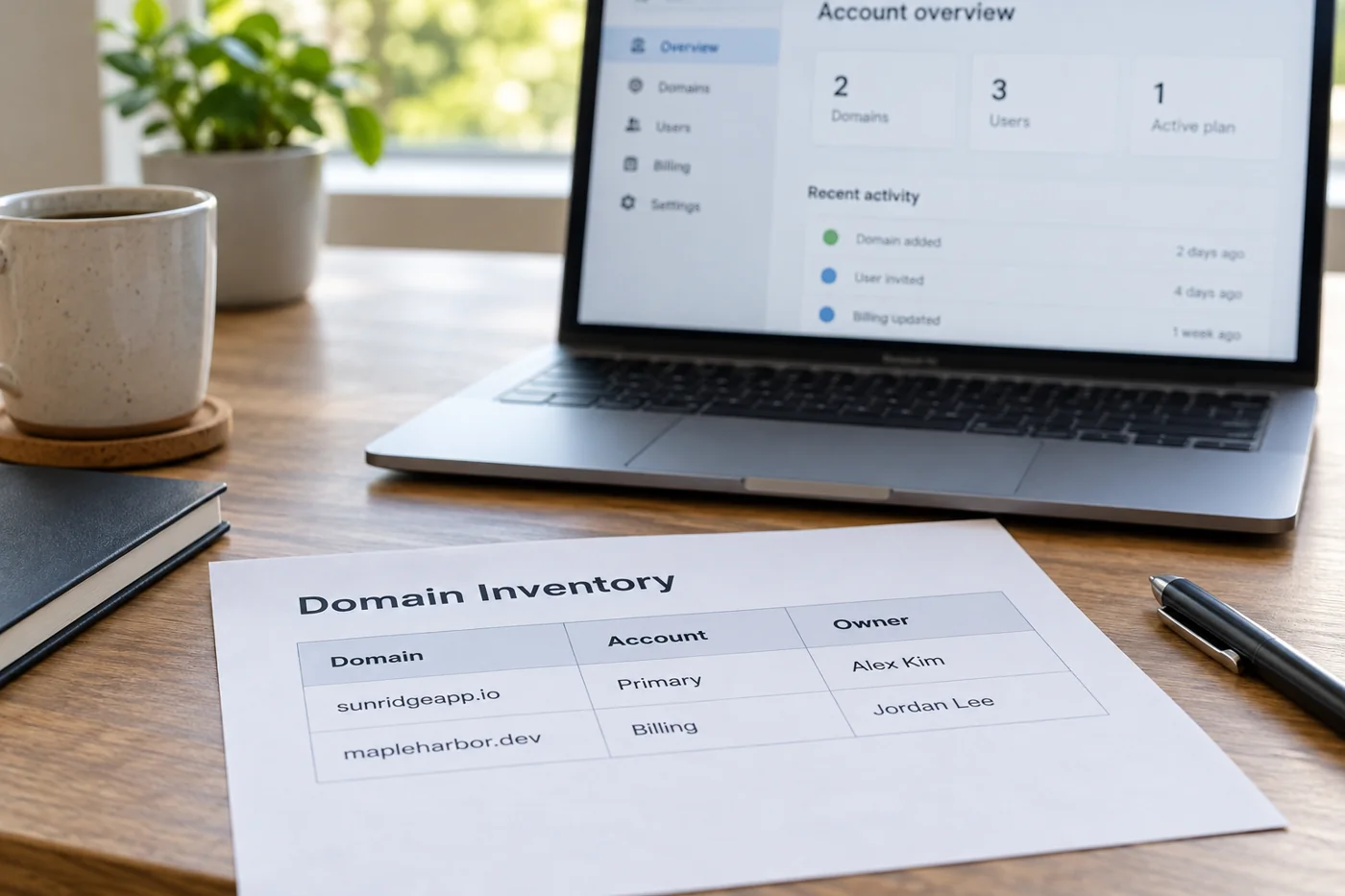
One domain does not necessarily mean one supplier
Record the exact domain, including its ending. Separately identify its registrar, the place managing DNS settings, website hosting and email service. These jobs may be bundled with one supplier, but do not have to be. The most recent hosting invoice therefore does not necessarily explain every responsibility.
Start with verifiable records and existing accounts. Mark unconfirmed information rather than presenting it as fact. If a previous agency was involved, establish what documentation exists and how access is meant to be handed over. A publicly visible domain does not prove that your team can already use its management account.
Separate responsibility from access
Name a person responsible for the domain and someone covering their absence. Alongside them, record who may make technical changes and the documented route for obtaining access. Refer to the designated secure credential store instead of copying passwords into a shared spreadsheet.
Check access with the authorized people. An old account name in a list offers little help if recovery depends on an unreachable email address. Turn unresolved questions into tasks. Changes to contact details or permissions should subsequently appear in the inventory too.
Record why each domain exists
Briefly describe each domain's purpose: main website, email, redirection or an older service still in use. A domain with no visible website may still appear in email addresses or printed documents. Do not judge whether it is unnecessary from a browser visit alone.
Add the date and result of the last review. A modest table is sufficient for a small collection if someone maintains it. Every new registration and supplier change should have an assigned person updating the entry. Three confirmed responsibilities are more useful than a large list whose details nobody can interpret or verify.