What the record tells you
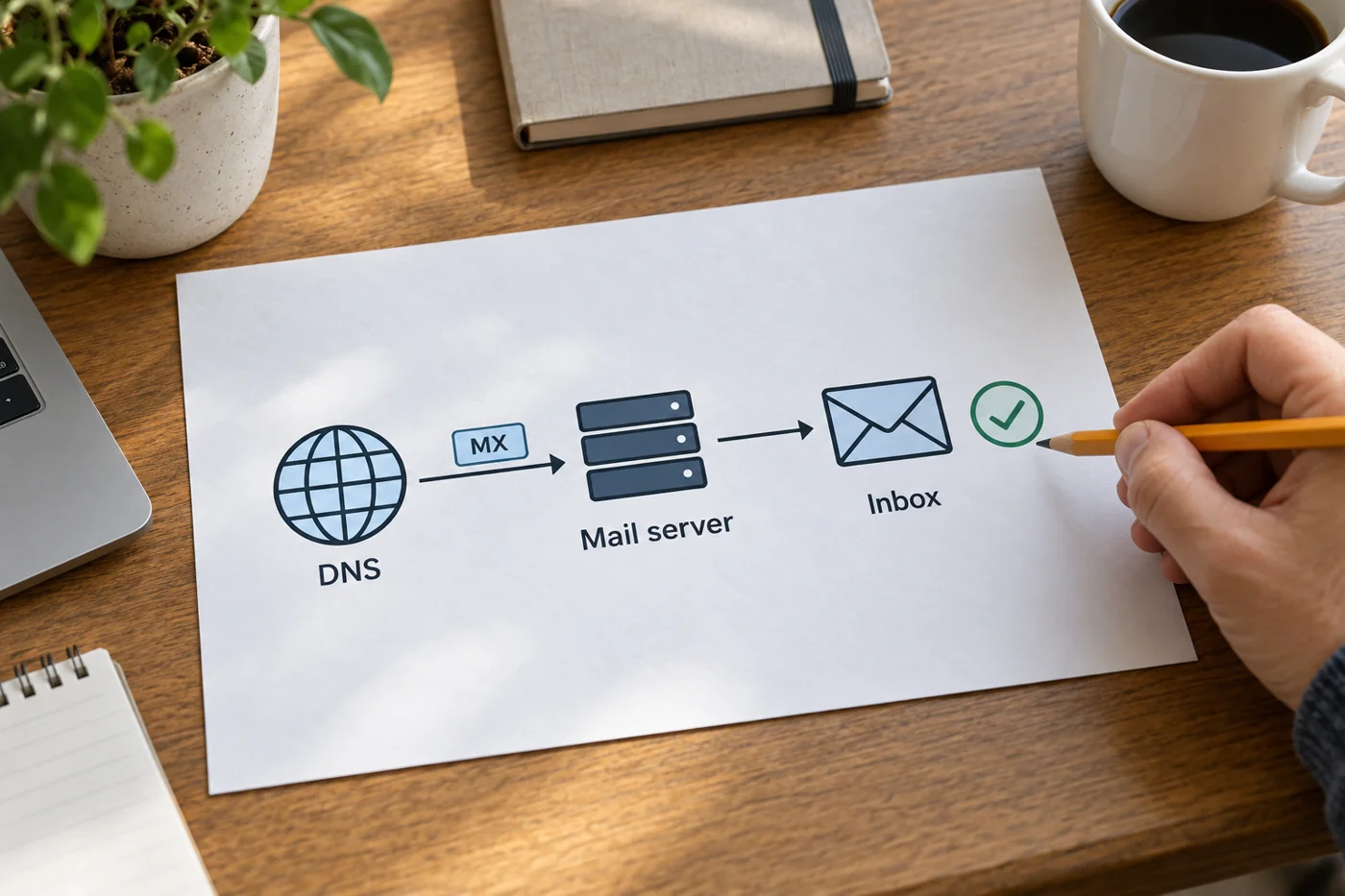
MX means Mail Exchange. A record specifies a mail server and a priority; where priority values differ, the lower value is preferred. Cloudflare describes these details as part of selecting a destination server for incoming mail. They concern the domain rather than every individual name before the @ sign.
Compare the published values with your mail provider's current instructions. Do not copy another organization's records merely because it uses the same service. Check that the values belong to the correct domain and the service actually configured for it. A provider's website address is not automatically the mail server name you need.
Check the recipient separately
Choose an actual address, such as the contact address published on the website. Establish whether it is a mailbox, an alias or a forwarding arrangement. If it forwards mail, include the final destination in the investigation. A correctly routed message may still encounter an unknown recipient or arrive somewhere other than expected.
Check the configuration through the responsible management account with an authorized person. Do not infer today's destination from an old signature. Recent address changes may leave old and new recipients in parallel use. Write down which version you are testing so that different cases are not accidentally compared later.
Run an external delivery test
By agreement, send a brief message from another controlled domain to the affected address. Use a distinctive subject and record the sending time and recipient. Include no confidential information. A message sent entirely within the same system may take a different route from incoming external mail.
Confirm arrival in the intended mailbox. If the message is missing, inspect relevant folders and existing filters. Record whether it appears in webmail but not in the local mail application. That distinction matters: a display or synchronisation problem requires a different investigation from a message that never reached the service.
Keep the failure information
If the sender receives a delivery failure notice, preserve its technical details for the responsible support contact. An unknown-recipient report offers a different clue from a rejected connection. Do not rely only on a translated summary such as “Sending failed” when more specific information appears below it.
No error message is not proof of delivery either. Agree when to check again and when to contact the provider with the evidence gathered. Repeated tests without distinctive labels are difficult to match. A small set of clearly documented messages is easier to investigate than a stream of nearly identical attempts with uncertain times.
Confirm sending and replying separately
Reply from the destination mailbox to the received test and check the result at the original sender. Record the address used for the reply. Successful incoming delivery does not automatically establish outbound sending or the intended sender identity. Treat that as an additional test rather than a property of the MX record.
For several public addresses, select examples representing different technical routes. A personal mailbox and a forwarded role alias each deserve a test. Use the documented address list instead of trying arbitrary spelling variations. This keeps the coverage understandable and identifies which functions remain untested when you hand the results to someone else.
Describe the finding along the route
For example: “MX values match the provider instructions; the external test to the contact address appears in webmail but not in the desktop application.” The next person then knows where to continue. “DNS works” or “Mail is broken” loses that useful distinction and can lead to repeating work already completed.
Do not change confirmed MX values as a precaution when the observed fault occurs later in the journey. Each additional alteration can introduce uncertainty. Keep record values and test times together, then investigate the remaining section deliberately. If a provider requests another test, give it a new identifiable subject so its result cannot be confused with an earlier attempt.