Record the change and its boundaries
Briefly describe what should change and which pages are affected. New wording in a shared template may appear widely, while an individual article affects only itself. Check the reach of the source being edited. Also preserve the previous state so a return is possible.
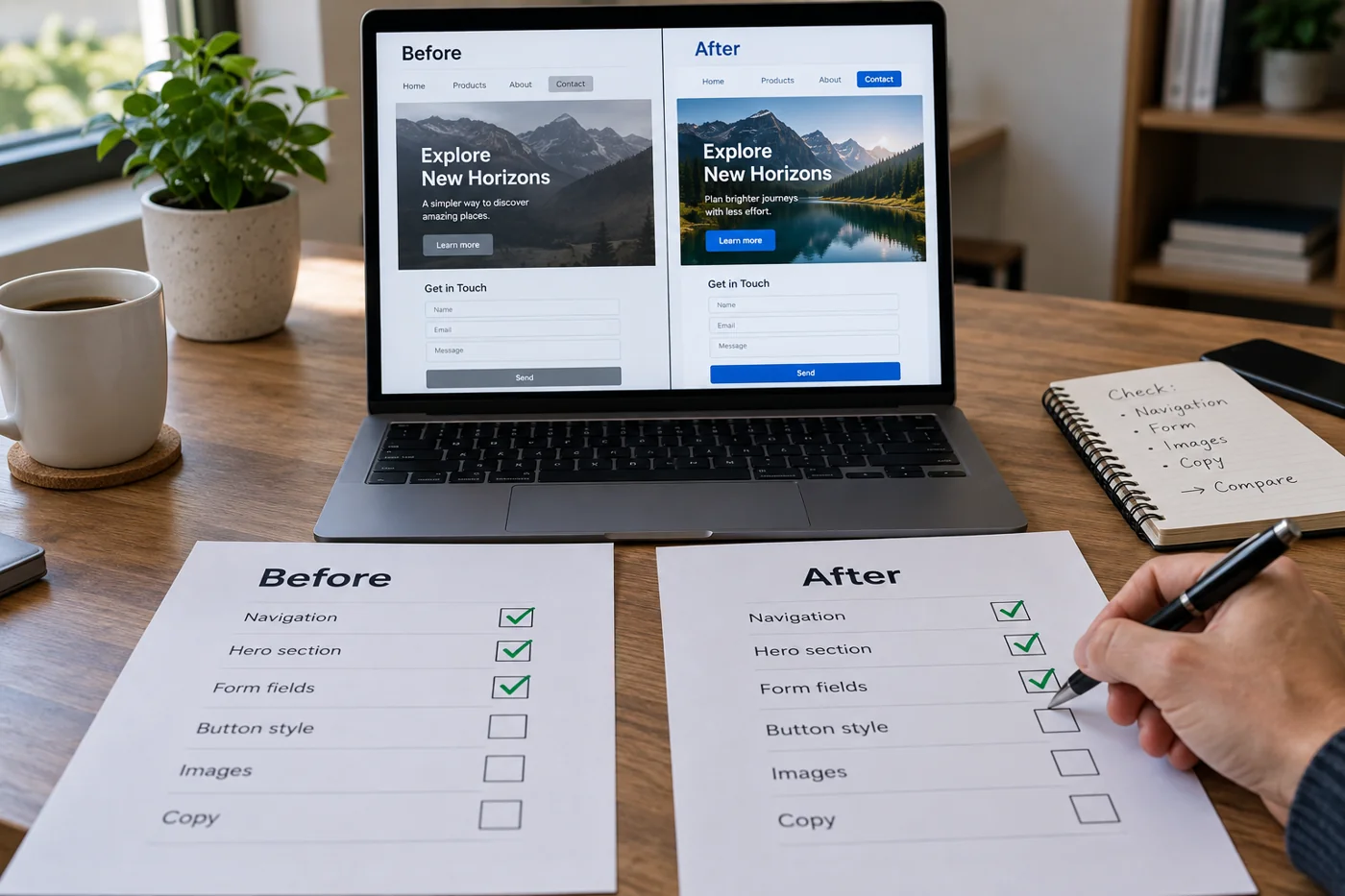
Choose relevant test cases. A text correction requires different checks from a new form. Do not copy an extensive standard list containing irrelevant items, but do not omit necessary checks merely because they take longer than saving. The selection should follow the actual change.
Inspect the intended output beforehand
Open the edited page in the available preview or local environment. Check actual text, images, links and a small-screen view. A correct editor field does not guarantee correct output. Templates, caches or other dependencies may affect the result.
For multiple languages, inspect both versions and their relationship. An updated link should not reach the new destination in only one language. For downloads, inspect the file itself rather than only its displayed name. For a changed email address, compare visible text and link target.
Record unresolved points before approval. A deliberately outstanding component differs from a forgotten check. Do not publish a functional placeholder as an allegedly finished feature. Review status should show what is genuinely ready for use.
Identify the publication clearly
Record which version was published and when. With several contributors, clarify who publishes and who checks afterwards. Otherwise an approved version may accidentally be replaced by an older export. A short version note or traceable change identifier is often enough.
Check whether other content is changing simultaneously. If a rollback becomes necessary, newly added information should not disappear unnoticed. Coordinate larger changes with people working in the same system. A return path is useful only when its consequences are understood.
Retest a late correction deliberately
A contact address or download may be replaced shortly before approval. Record that change explicitly even when the rest of the page has already been checked. Repeat the affected route from visible link to destination. An earlier successful inspection does not automatically cover a file replaced afterwards.
Also inspect places where the same information appears more than once. A telephone number mentioned in body text, a button and the other language requires all three occurrences to be corrected. The final change need not restart every check, but its effects should be clearly bounded.
Identify an unambiguous version for handover. If further text changes follow acceptance, make clear that they were not part of the earlier review. A short change note with the affected URLs is often sufficient to preserve that boundary. This helps the next editor know which tests should be repeated.
Check externally after publication
Open the actual reachable address fresh and repeat the intended cases. A successful preview does not replace this check. Include at least the changed journey and an adjacent unchanged one to expose unintended effects.
If an old version still appears, distinguish your own displayed state from what is actually being served. Compare a fresh request with the supplied files or system information before publishing the same change repeatedly. Repeated overwriting without identifying the cause can make the situation less clear.
Close with an actual outcome
Document the published version, checked routes and remaining limitations. “Contact address checked on German and English pages including link targets” says more than “Everything done”. If only representative pages were checked, state that scope specifically.
When an error appears, choose correction or rollback according to its effect. A blocked contact route has different urgency from a minor layout gap. After correction, repeat the affected case. The change therefore ends not with upload but with output that has been confirmed in a traceable way.