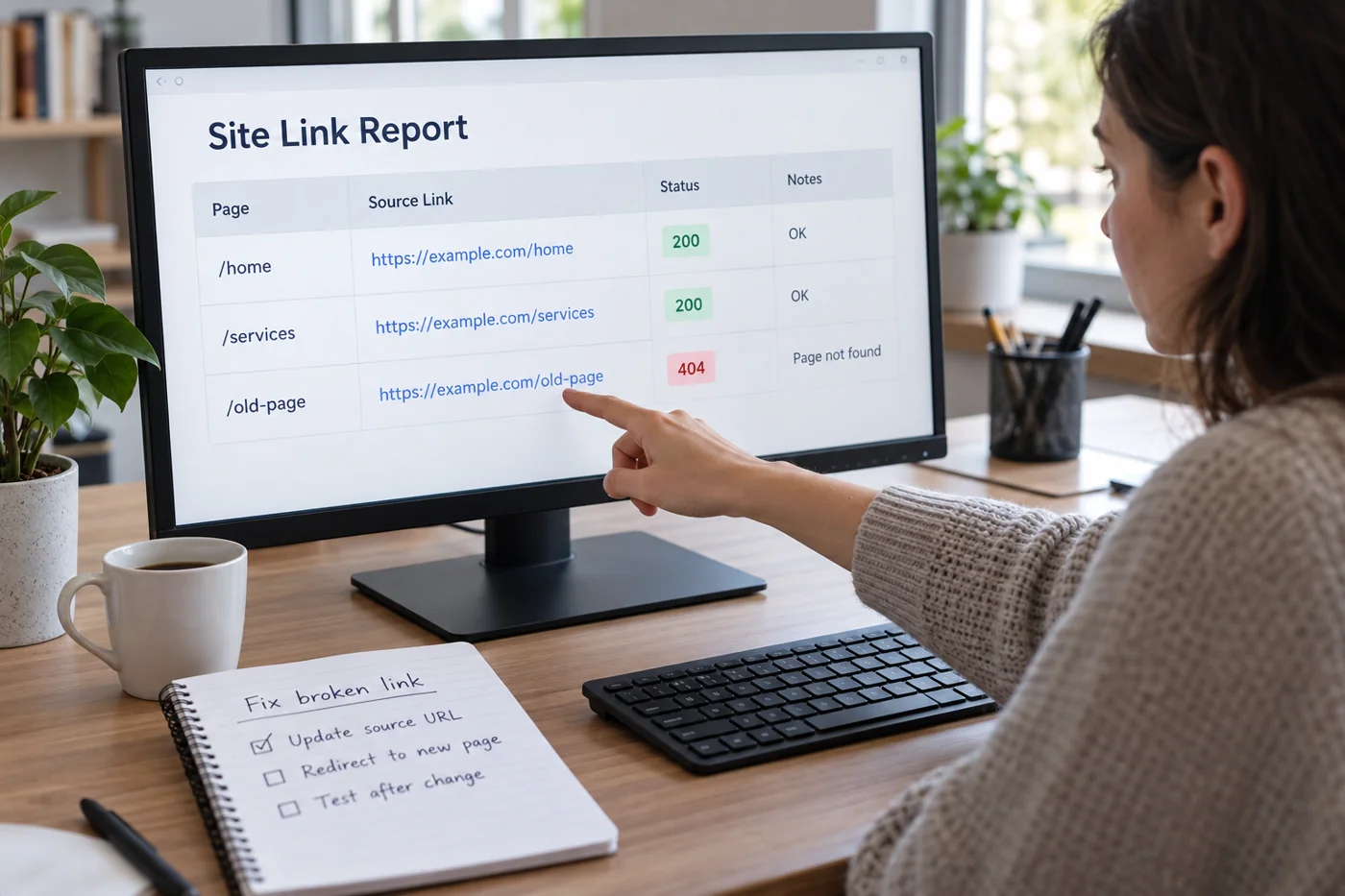
Record source and destination together
Note the source page, visible link text and actual target address. A screenshot often omits the last detail. If several pages use the same link, record their locations or the reused component. Updating a central menu differs from correcting one article.
Open the destination directly and compare that result with following the link. A typo, incorrect relative path and missing document have different causes. Also check whether only a section anchor is missing from an existing page. The page may load without moving to the expected section.
Establish the appropriate content destination
Find the current information rather than merely a similar-looking address. An old checklist should not automatically lead to the homepage when a new version exists. Compare purpose and content. If uncertain, resolve the content question before inserting a technically working but unsuitable replacement.
Content removed without replacement needs different treatment from a move. Remove or revise the statement on the source page so it no longer promises an unavailable offering. A redirect does not replace deciding what visitors should now be told.
Distinguish a working redirect from a suitable destination
A link can reach a page and still need revision. If the destination now serves a different purpose, the surrounding explanation may no longer fit. Open an old registration link, for example: if it now leads to general contact information, the text should not continue promising direct registration. The review therefore extends beyond technical reachability.
For these cases, record the intended editorial solution. A new link label may be enough, or the required destination information may be missing entirely. Keep those tasks distinct from genuinely missing files so the responsible person can make the appropriate correction. Recheck the surrounding paragraph afterwards, not just the altered address.
Group corrections without mixing causes
A recurring error can be corrected across several locations in one operation. Still preserve the relationship between old and new destination. Otherwise it becomes difficult to tell whether a similar address was intentionally unchanged or overlooked.
If files or pages are generated from templates, correct the authoritative source. Editing only generated HTML may be undone by the next build. Record where the persistent correction was made. That matters more to the next editor than the number of characters replaced.
Retest the complete route
After changing it, reload the source page and follow the link. Inspect the content reached, any download and the route back. Check a corresponding second language version separately when present. Matching page names do not guarantee the correct language pairing.
An automated link check can find many technical errors but cannot fully replace checking intended meaning. Report the results separately: which addresses were checked technically and which important journeys also received content review. Keep unresolved cases with their cause and owner rather than apparently closing them with any reachable destination.